


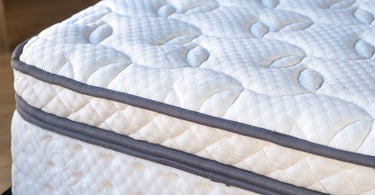
In 2026, choosing a mattress is about much more than simply finding a soft or firm sleeping surface. Thanks to advancements in sleep science and modern technologies, the right mattress is now one of the most crucial elements for regeneration, proper spinal support, and restful sleep. However, many get lost in the vast selection, while still struggling with back pain, muscle tension, or waking up tired.
Choosing a mattress is not an easy task at all, as many questions can arise:
- What kind of mattress should I buy that will be comfortable in the long run?
- Which is the best mattress for my sleeping position and body weight, offering maximum comfort and ensuring restful sleep?
- What is a good bed mattress really like in 2026, when everything from simple foam to innovative hybrid systems can be found on the market?
The selection of a good mattress does not depend on a single brand or fashionable technology, but on how well it adapts to an individual's body type, sleeping habits, and thermal comfort. Among modern mattresses, there are many solutions, from simple foam mattresses to advanced hybrid systems, so the most important aspects are always personalized comfort and proper support.
Our blog post aims to provide a comprehensive overview of the differences between modern raw materials and to help you where and how to look for a solution for perfect, restful sleep.
What does "good mattress" mean in practice?
The sleeping surface is not merely a passive comfort layer, but a dynamic support system that actively interacts with the anatomy of the human body. A mattress can be considered good quality if it is able to maintain the natural "S" curve of the spine in all sleeping positions, while optimally distributing mechanical pressure on the body surface.
A good mattress is not only comfortable but also provides proper spinal support, relieves body pressure, and promotes restful sleep. The right sleeping surface can distribute body weight evenly, preventing uncomfortable pressure points on the shoulders or hips, which can lead to frequent tossing and turning and superficial sleep.
In the case of an ergonomic, zoned mattress, the surface does not create pressure points, so sleep will not be superficial and interrupted, and we can wake up fresh, without physical pain and mental exhaustion.
To achieve the appropriate quality, the industry has developed numerous advanced raw materials. Understanding these raw materials and their professional explanations is essential for making an informed choice:
- Premium cold foam: The most modern generation of polyurethane foams, named after the lower temperature of the manufacturing process. It is a highly elastic, excellently breathable material that, thanks to its open-cell porous structure, provides durable support and efficiently dissipates heat and moisture emitted by the body. Premium cold foam mattresses are typically zoned: they exert different resistance adapted to the body's various pressure points, for example, the heavier hip area receives stronger support, while the shoulder area can sink in more softly.
Recommended for: those prone to sweating, those who prefer stable, firm support
- Latex: A premium category, natural or hybrid-based (combining synthetic components and those derived from rubber tree sap), point-elastic layer. During the vulcanization process, a very dense yet elastic structure is created, which has antiallergenic properties, preventing the colonization of dust mites and fungi. Latex mattresses have outstanding shape retention capabilities, and the air channels created during manufacturing ensure continuous air circulation and moisture evaporation, thus creating an ideal microclimatic environment.
Recommended for: allergy sufferers, those seeking organic materials and a fast-response surface
- Memory foam: Reacts to body heat and weight to conform to the body's shape, thereby reducing pressure points and providing more comfortable sleep. Older generation foam models tended to retain heat, but 2026's high-tech materials are now made with an open-cell structure that actively draws heat away from the body. Thus, the heat dissipation of modern versions is much better.
Recommended for: those with joint pain, those sensitive to pressure points
- Advanced steel spring systems: In pocket spring systems, the springs are individually sewn into fabric pockets, so the mattress accurately follows the contours of the body, breathes well, and reduces motion transfer. More advanced spring systems – such as the double-tempered (DHT) steel springs used by Yatas – are more durable, helping the mattress retain its original shape for a long time and providing even more stable support.
Recommended for: pocket spring pairs (even with different body weights), those requiring excellent breathability, DHT springs for those seeking robust support and orthopedic stability
Choosing the right mattress is important because a poorly chosen sleeping surface can lead to back pain, restless sleep, and daytime fatigue in the long run.

What happens to our body when we don't sleep on the right mattress?
Research suggests that sleep is not merely simple rest or "switching off," but a complex process during which the nervous system, circulation, and hormonal system continuously work to regenerate the body.
Nervous system and physical tension
If the mattress is too firm or too soft, the body cannot relax properly during sleep. The muscles constantly adjust to maintain body balance, making sleep more restless. Due to uncomfortable bedding, tossing and turning and micro-awakenings may be more frequent, which impairs the quality of deep sleep and regeneration.
Circulation and musculature
Due to poor support, body weight can be concentrated on certain points – such as the shoulders or hips – which can impair blood circulation and cause numbness. With a mattress that is too soft, the spine can be forced into an unnatural position, increasing the likelihood of lower back and muscle pain.
Hormonal effect and disruption of the internal clock
Uncomfortable sleep can increase the level of stress hormones while decreasing melatonin production. Without adequate melatonin levels, sleep becomes "fragmented," and the internal biological clock (circadian rhythm) is disrupted, which not only increases nighttime tossing and turning but also weakens the immune system, impairs metabolism, and accelerates cellular aging in the long run.
It is important to note that in women, hormonal fluctuations (such as melatonin decrease during the menstrual cycle or menopause) can further sensitize the body to a poor sleeping environment.
Tips for choosing - Which is a good mattress?
When choosing a mattress, the following key factors should be considered.
Selection based on sleeping positions
- For side sleepers, a softer, body-conforming mattress is recommended, which relieves pressure on the shoulders and hips.
- For back sleepers, a medium-firm mattress is ideal, providing proper lumbar support.
- For stomach sleepers, a firmer sleeping surface is suggested to keep the spine in a natural position.
Consideration of body type and weight
Body weight significantly influences what firmness of mattress will be comfortable. For lighter individuals, a softer mattress is recommended, while for heavier individuals, a more stable, firmer support mattress is advised for proper posture and long lifespan.
It is especially important to consider weight limits; the mattress must maintain its shape and elasticity over the long term. Therefore, for heavier body weights, it is advisable to choose higher density (HD) foams or reinforced, double-tempered (DHT) steel springs.
GENERALLY, CUSTOMERS FIND MEDIUM-FIRM MATTRESSES TO BE THE MOST COMFORTABLE: YOU CAN READ A STUDY ABOUT THE REASONS HERE.
Couples sleeping – avoiding compromises
- Sides of different firmness: Placing two separate but identical height mattresses in a shared bed frame, where each partner can customize the firmness to their own needs. (In the era of modern, innovative mattresses, couples rarely opt for this anymore.)
- Independent spring systems: Utilizing advanced pocket spring systems, such as the Free Zone technology developed by Yatas Bedding. The essence of this is that the springs, individually sewn into textile pockets, completely absorb motion energy, preventing one partner's nighttime tossing and turning from transferring to the other, while the point-elastic surface can dynamically adapt to different body weights.
The importance of thermal regulation
A good mattress helps regulate body temperature during sleep. Modern, well-ventilated mattresses made with cooling technologies reduce sweating and ensure more restful sleep.
2026's cutting-edge technology – such as Visco Gel used in Yatas's Black Ice mattress, or Copper Cool (copper molecule) technology in the Cool & Wool mattress – ensures continuous heat dissipation from the body, shortening the time it takes to fall asleep and reducing heart rate.
THE BENEFITS OF INNOVATIVE GEL TECHNOLOGY USED IN MATTRESSES ARE SUPPORTED BY STUDIES.
Role of accessories in sleep
A proper pillow that relieves pressure on the cervical spine, a breathable duvet, and bedding are also important for comfortable and restful sleep: the pillow properly supports the neck, while "breathable" bedding helps maintain the ideal sleeping temperature.
WHAT IS NEEDED FOR HEALTHY SLEEP? – READ OUR BLOG POST ABOUT IT!
Warranty and quality - What to look for when buying?
Short-term vs. long-term investment
When buying a mattress, it's worth considering not only comfort but also durability and quality, as a mattress is used every night for many years. Cheaper, lower-quality foam mattresses can easily "tire out" and develop depressions over time, which compromises proper spinal support and can lead to back pain or restless sleep. In contrast, high-density cold foam, latex, or advanced pocket spring systems retain their shape and comfort for a longer period.
For example, the double heat-treated (DHT) steel springs used by Yatas Bedding have been proven in international tests to maintain their height and shape stability even under extreme stress, thus providing safe orthopedic support in the long term.
Professional certifications and ergonomic recognitions
It is worth looking for models that have undergone serious ergonomic tests. A good example of this is the certification from the German IGR (Institut für Gesundheit und Ergonomie) institute, which verifies through independent tests performed under real-world conditions that the given mattress (like many models in the Yatas range) is indeed capable of providing optimal spinal support, maintaining correct posture, and relieving pressure from major pressure points.
Warranty is also an important consideration!
A reliable manufacturer can offer up to a 10-year warranty on the durability of the mattress core, which can be a good sign of quality. It is advisable to choose a mattress that has an independent ergonomic or health certification, as these confirm that the mattress truly provides adequate support for the spine. A reliable manufacturer, relying on the quality of its materials, typically offers an extended warranty of up to 10 years on the mattress core, which is a clear indicator of long-term safety.
Hygiene is also essential!
The human body emits a significant amount of moisture (vapor and sweat) each night, which, in the absence of proper ventilation, can get trapped in the mattress core, providing an ideal breeding ground for dust mites and mold. Well-ventilated mattresses help to dissipate moisture, thereby reducing the chances of dust mites and mold developing. Practical choices include removable, washable covers and the use of waterproof, yet breathable mattress protectors, which keep the mattress clean and in good condition for longer.

What is the ideal sleeping environment?
The ideal sleeping environment isn't just about the right mattress, but also about the entire bedroom design. Research suggests that for restful sleep, the mattress, room temperature, lighting conditions, and noise level must all work together to support the body's relaxation and regeneration.
One of the most important factors is the appropriate temperature. The body needs to cool down slightly during sleep to fall asleep more easily and reach the deep sleep stage. Therefore, the ideal bedroom temperature is usually between 16–19 °C. Modern mattresses' cooling technologies – such as well-ventilated foams or heat-dissipating layers – only work truly effectively if the room's climate is also suitable.
Darkness and silence also play a crucial role. Bright lights, especially the blue light from phones and other smart devices, can reduce melatonin production, making it difficult to fall asleep. Noises can easily cause micro-awakenings, which impair sleep quality. Therefore, it is advisable to reduce screen time before bed and create a calm, quiet environment.
Choosing the right bed base is also important, as it directly affects the mattress's support and ventilation. Even the best mattress will lose its ergonomic and hygienic benefits if its support structure is inadequate. If the slat spacing is too wide (greater than 4-5 cm), memory foam or pocket spring rows can protrude, leading to structural damage to the mattress and the recurrence of back pain.
Yatas Bedding recommends a completely closed support, meaning a flat surface under the mattress, as this also contributes to the mattress's long lifespan. There is no need to worry about "stuffiness," as the layers are designed to ventilate properly.
The psychological effect of the sleeping environment should not be underestimated. Experts say it's important for the brain to associate the bedroom with rest. Therefore, it's advisable to avoid working, long phone calls, or watching TV in bed. A calm, tidy, and stimulation-free bedroom helps the body relax more easily and sleep more deeply.
A PUBLICATION BY THE GLOBAL WELLNESS INSTITUTE REVEALS MANY INTERESTING FACTS ON THE FOLLOWING TOPIC: IN PURSUIT OF PERFECT SLEEP – THESE WILL BE THE DEFINING TRENDS OF 2026.
Good sleep, therefore, does not depend on a single factor, but on a well-functioning "sleep ecosystem," where the right mattress, a pleasant environment, and a conscious evening routine together support restful regeneration.
However, choosing the perfect mattress is inconceivable without personal testing. It is worth visiting Yatas Bedding stores, where you can find the key to long-term, restful sleep through personalized consultation.


