


More and more people are recognizing the importance of quality sleep these days. Many are looking for a solution that offers both traditional support and modern comfort. Hybrid technology fills exactly this gap and has fundamentally revolutionized rest.
-
But what does a hybrid mattress mean for everyday sleep?
-
Is the combination of a spring system and foam layers truly the solution for back pain and sleep disorders?
-
What are the advantages of a hybrid mattress compared to other types?
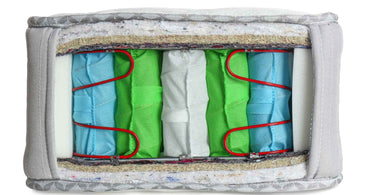
The hybrid mattress combines the stable support and good ventilation of spring mattresses with the comfort and body-conforming properties of foam layers – such as memory foam or latex. While traditional spring mattresses often do not adequately follow the contours of the body, all-foam mattresses can be prone to heat retention. Hybrid mattresses use different layers to help provide proper spinal support, reduce pressure on pressure points, and ensure a more comfortable and restful sleep.
So, if you choose a hybrid mattress, you no longer have to choose between the firm, well-ventilated support provided by traditional spring systems and the excellent pressure distribution and contouring offered by modern foams (such as memory foam or latex).
What does a hybrid mattress mean?
The term hybrid mattress originally comes from Anglo-Saxon markets, where it referred to premium mattresses that combined a classic innerspring support core with modern viscoelastic or latex comfort layers.
Structural design and material usage
The base of a hybrid mattress is typically a pocket spring system, which provides point elasticity. The essence of pocket spring technology is that small-diameter steel springs are individually sewn into fabric pockets. This means that they can move independently of each other, so the mattress only depresses where the actual load is applied, thereby drastically reducing motion transfer. Various comfort layers are built upon this dynamic, load-bearing core, such as memory foam, latex made from natural rubber, or high-density (HD/HR) foam.
In creating the ideal hybrid experience, the material and layer thickness play a critical role:
-
The mattress is not too firm, but not too soft either. The spring system provides firm resistance and rebound, while the comfort layer is responsible for softness and contouring to the body.
-
It provides dynamic support by conforming to the body's shape. A well-constructed hybrid mattress can adapt to body movement without creating a so-called "quicksand" effect, which is a common drawback of pure memory foam mattresses.
-
Due to motion isolation, a partner's movements are not disturbing. The independent spring movement – like the FreeZone technology developed by Yatas Bedding – ensures that the energy from tossing and turning at night is absorbed and does not transfer to the other side of the mattress.
When designing hybrid structures, both sleep experience and durability are in focus. The upper "pillow-top" layers or pressure-distributing foams make it comfortable, gently cradling the body. Stable support prevents the mattress from sagging prematurely, maintains optimal spinal alignment, and guarantees a healthy sleeping environment for many years.
A hybrid mattress is therefore both comfortable and provides good spinal support: it's not too firm, but not too soft either. Compared to traditional spring mattresses, it transfers less motion, so a partner's tossing and turning is less disruptive. Additionally, it breathes better than pure memory foam mattresses, so it retains less heat. The advantages of a hybrid mattress are that it simultaneously provides good air circulation, high motion isolation, and durable support, thus creating a comfortable and ergonomic sleeping environment in the long term.
What happens to our body on a hybrid mattress?
During sleep, the body needs not only physical support but also an optimal environment for perfect cellular regeneration.
Anatomical support and spinal protection
The most important criterion for a suitable mattress is maintaining the natural (S-shaped) curvature of the spine in both back and side sleeping positions. The pocket spring core is responsible for the natural position of the spine.
In the most advanced hybrid models, thanks to the zoned design, the shoulder and hip areas receive support of different firmnesses. In a 5 or 7-zone system (such as Yatas' VZS – Variable Zonal Support technology), the wire thickness and tension of the springs are calibrated to the body's anatomy. The shoulder zone is typically softer, allowing the shoulder to gently sink in for side sleepers without impeding circulation. Simultaneously, the lumbar zone has firmer springs to firmly support the pelvis, eliminating muscle tension that causes back pain.
Nervous system and physical relaxation
Surface pressure distribution is a critical factor for continuous and deep sleep. Medical and ergonomic measurements prove that if the pressure on the tissues on the mattress surface is too high, blood circulation will not be adequate, leading to local tissue oxygen deficiency. The brain enters resting mode more easily if we don't feel pressure points on our body. When the body perceives uncomfortable pressure due to inadequate support, the brain generates so-called micro-awakenings.
The comfort layers of hybrid mattresses absorb this surface pressure, while the elastic surface helps ensure that tossing and turning at night is not strenuous for the muscles.
Hormonal balance and temperature regulation
The human body follows a very precise circadian rhythm, an integral part of which is the fluctuation of body temperature. To fall asleep and maintain deep sleep, the core temperature must decrease by approximately 1 °C. The excellent ventilation of the hybrid structure helps maintain the body's ideal temperature, unlike dense, closed-cell foam mattresses, which tend to retain the heat emitted by the body.
If the mattress-skin microclimate overheats and becomes humid, the sympathetic nervous system is activated, heart rate increases, leading to shallower sleep. If body temperature cannot decrease due to poor ventilation, the body maintains higher cortisol levels (stress hormone), which blocks the effect of melatonin, thus inhibiting the nocturnal release of growth hormones and the immune system's cell regeneration processes. The pocket spring system of hybrid mattresses functions as a vertical air channel: with every movement, it pumps out warm air, so the surface temperature can remain up to 2-3 °C lower, optimizing biochemical processes.
The comfort layers of hybrid mattresses reduce pressure on the body, which promotes deeper, more peaceful sleep. With fewer pressure points, the brain "wakes up" less often for short periods during the night, allowing the body to more easily reach the most restorative sleep stages. In addition, the good ventilation of hybrid mattresses helps maintain an ideal sleeping temperature, allowing the body to cool down more easily when falling asleep. This supports deeper sleep, hormonal balance, and the natural processes of nocturnal regeneration.
The most common reasons – Why choose hybrid technology?
Behind the dominance of hybrid models in the premium mattress market are clear physical, physiological, and comfort-related reasons. The advantages of a hybrid mattress extend far beyond mere comfort; they offer a technological solution to many chronic sleep and musculoskeletal problems.
Meeting and synergy of materials
Hybrid mattresses have become so popular because they offer comfort, stable support, and a long lifespan all at once. The combination of a pocket spring system and various foam layers eliminates the "bouncy feel" of traditional spring mattresses and the excessive sinking of memory foam mattresses. This makes it easier to turn over, more comfortable to get up, while the mattress adapts well to the body's shape and properly supports the spine.
Stability, lifespan, and edge support
Hybrid mattresses are also more durable because their stable structure and reinforced edges maintain their shape and support in the long run. They can be a particularly good choice for those who want a flexible yet stable sleeping surface, are easily awakened by their partner's movements, tend to sweat at night, or value proper spinal support and a more peaceful, deeper sleep.
Who should choose this type of mattress?
-
For those who like flexible yet stable support: Hybrids provide the feeling of "hotel comfort" without compromising orthopedic spinal support.
-
For couples with different body weights, where independent springing is key: Due to pocket spring technology and FreeZone solutions, one partner's tossing and turning at night does not wake the other at all.
-
For those prone to night sweats and for whom ventilation is important: The combination of open-cell foams and a "breathing" spring core prevents heat traps from forming.
-
For those living with chronic pain: In cases of CRPS (Complex Regional Pain Syndrome) or Hypermobility Spectrum Disorder (HSD), moderately firm hybrid surfaces prevent joint hyperextension and reduce painful surface pressure simultaneously.
-
For those struggling with nocturia: Micro-awakenings caused by uncomfortable mattresses give the brain a chance to recognize mild bladder sensations. By reducing pressure points, hybrid mattresses deepen sleep, thus significantly reducing the number of night awakenings.
Levels of Comfort: Why Every Layer Matters?
The comfort of hybrid mattresses comes from the coordinated functioning of their layered structure. The upper foam or latex layers immediately adapt to the body, reduce pressure on pressure points, and provide a pleasant, soft feel, while special covers help dissipate heat and maintain a fresh sleeping environment. The lower layers and the pocket spring system ensure proper spinal support, which can reduce back pain and improve sleep quality in the long run.
Modern hybrid mattresses also incorporate special technologies, such as cooling gel or copper-infused foams, which help regulate body temperature and create a more hygienic environment. Some developments also support better blood circulation, more restful sleep, and deeper regeneration, making the hybrid mattress not a compromise, but a combination of the advantages of various technologies.
Leading manufacturers in the sleep industry have integrated special microclimatic and physiological innovations into these layers that go beyond mere support:
-
Magnetic and ionic technologies: Yatas Bedding's Tesla Sleep Power mattress uses fabric woven with magnetic fibers, which balances the body's ions, improves blood circulation, and, based on clinical tests, can increase the length of the REM phase by up to 11%. The Oxyon negative ion technology can also promote serotonin (happiness hormone) production and purify inhaled air.
-
Heat-regulating technologies: Copper Cool (copper-infused) or gel memory foam layers not only draw body heat away from the skin surface but also maximize mattress hygiene thanks to copper's natural antibacterial effect.
How to choose a hybrid mattress?
When choosing the right hybrid mattress, it is important to consider sleeping habits, body weight, and individual comfort needs. A good choice is a model made with appropriate spring density and durable, high-density foam layers, as these ensure comfort, contouring, and a long lifespan. Thicker, premium-designed mattresses generally have a more complex layer structure, thus providing better support and comfort.
The ideal firmness also depends on the sleeping position: for back sleepers, a medium-firm mattress is generally recommended, for side sleepers, proper pressure relief for the shoulders and hips is important, while for stomach sleepers, a firmer support might be more comfortable. The advantage of hybrid mattresses is that they adapt well to various body types and sleeping habits, making them one of the most versatile solutions today.
Yatas Bedding offers innovative solutions such as the Tesla Sleep Power with its magnetic technology, the Cool & Wool for natural temperature regulation, or the Orthopedic Support for those seeking firm but zoned support.
The role of physical comfort in a long life
Quality sleep plays a fundamental role in physical and mental regeneration, as the body actively works to restore cells, muscles, and the nervous system at night. A hybrid mattress that provides proper support and good ventilation helps relax muscles, reduces pressure on the body, and supports more even breathing and more restful sleep. As a result, there may be fewer nocturnal awakenings, which contributes to deeper and more restorative sleep.
Undisturbed sleep not only improves well-being but also supports hormonal balance, immune system function, and mental performance. A suitable mattress can therefore contribute to better energy levels, concentration, and overall quality of life in the long term, making it one of the most important investments in health.
A perfect mattress that meets all needs is not just a sleeping surface, but the most important source of daily energy and physical well-being. Our knowledgeable colleagues will help you find the most suitable, uncompromising solution for you in our Yatas Bedding stores.


